The illustrator offers practical tips on protecting your work as an independent creative

By Liana Yadav
It’s tricky to be a creative person in today’s world. It is even trickier to make money off of one’s creativity. In informal work environments, independent artists and freelancers often have to fight their own battles. And sometimes, the only way to win is to get creative with it.
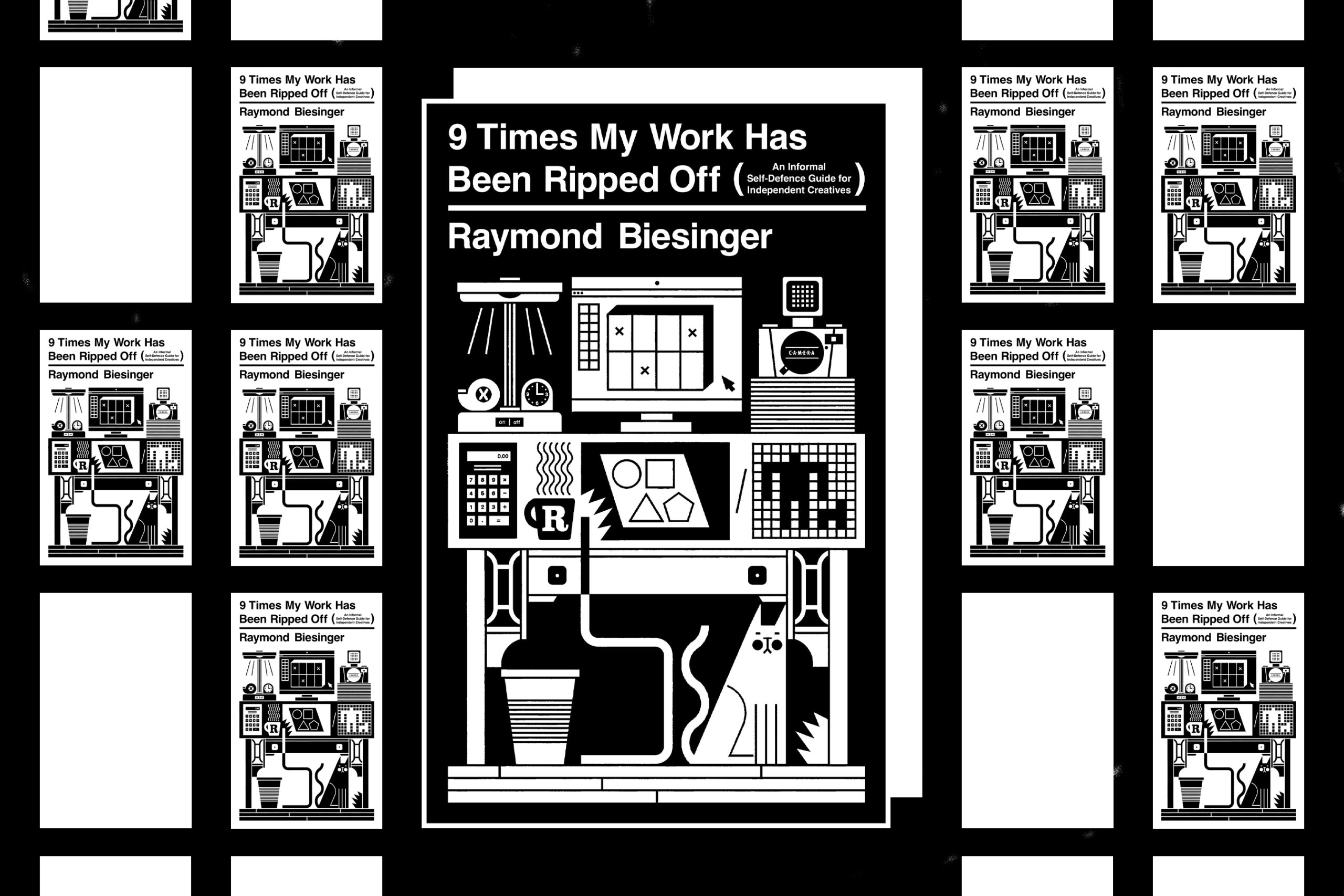
Illustrator-artist-author Raymond Biesinger has been in the industry for more than 20 years, during which he has worked on over 1000 projects globally. He’s now released a true crime-esque tell-all memoir, reflecting on his life’s work and the different times it’s been stolen. Published by Drawn & Quarterly, 9 Times My Work Has Been Ripped Off: An Informal Self-Defense Guide for Independent Creatives generously outlines the roundabout ways Biesinger has succeeded, and sometimes failed, to keep his work safe and his creative sanctity intact.
“This book is about recognizing that your creative labour is worth defending,” said Biesinger in an interview with CanCulture. “I am a compulsive note-taker and archivist. I studied history in university and I always thought about primary sources being important. I can pretty much go back through any year, any week, and see exactly what I was working on at that time.”
Biesinger started off as a collagist in university in Alberta before becoming an illustrator by complete accident. In 2004, his paycheques ranged from $950 in May to just $350 in September, which was completely unliveable.
The unpredictability of the illustrator’s career meant that getting legal help was not financially feasible. At his Toronto book launch at Flying Books, Biesinger said he avoided the legal process for eight out of nine rip-offs.
“The moment a lawyer is involved is the moment the lawyer is the only one getting paid. The member rate of a local lawyer at Illustration Québec is $200 an hour, so many of these disputes cost about $500 to $1000. For me or for any of you, that’s rent, that’s groceries for a damn long time. It’s an absolute shame that the legal system is not useful in this context.”
This is not Biesinger’s first writing project. In 2022, he worked with The Globe and Mail’s architecture critic Alex Bozikovic on the bestseller 305 Lost Buildings of Canada. Fittingly, Bozikovic sat across from Biesinger at this launch, asking him about his ability to be both artistic and tactical in his work. For the author, the goal was more than just avoiding burnout in an all-consuming creative career. He wanted to make this his sole income, live with reasonable labour standards and eventually retire doing what he loves. The book became a way to express how he has learned to do that.
Addressed largely to fellow creatives, 9 Times My Work Has Been Ripped Off recognizes that dealing with theft of one’s work can feel emotional or embarrassing, due to art’s personal nature. But if a creative wants a stable career, Biesinger says they have to improvise and discover their own ways to attain justice and settle grievances.
Despite having a paper trail, Biesinger did not name or shame any of the nine culprits in the book, which include an agency, a government organization and a large-scale corporation. The project began as a negotiation tactic out of spite against a non-profit organization that had been using the author’s illustration without credit for three years. Biesinger was particularly angered that they wouldn’t pay him fairly despite being able to afford it.
Instead, Biesinger decided to produce a survival guide for artists in a capitalist world. Through enduring ups and downs in his career, he figured out a way to sustainably pursue his passions.
Describing himself as fitting a category of “knownness,” where the public has likely seen his work without attributing it to his name, Biesinger’s illustrations have a distinct style in which elements come together to create a layered yet cohesive collage. Sharp lines and small details lend expression to his designs, allowing it to be complex in its messaging. As a result, Biesinger has not dealt with many AI knock-offs. He believes his work relies on niche knowledge, making it unlikely to fall under the training data used for AI. It is also why he is not worried about the future of creatives like him.
“[AI] is aiming for the average,” said Biesinger in the interview. “My career hasn’t been about that. It’s been more about finding a way to express the hidden interesting data. I habitually create a lot of edges that it just simply won’t be able to make because of its technical limitations.”
The book cover represents Biesinger’s illustrative style, which he has been honing since the early 2000s. He designed it before he even wrote the book, including elements that tonally complemented the theme. One such element is his cat Casper, whose curled tail swayed back and forth in the background as Biesinger spoke passionately about his life’s work.
9 Times My Work Has Been Ripped Off is helpful to anyone who feels driven to create, especially against the stacked odds produced by capitalist society that reward productivity over authenticity. Within its pages, readers will find helpful tips to build a supportive network, consistently practice their craft, find a personal style, reach out to clients and get others to honour their creative labour. But most importantly, you’ll learn that your creativity as an independent artist can extend to your negotiating tactics. If you do not know where to start, Raymond Biesinger has nine fresh ideas for you.