
Author Saeed Teebi launches his first memoir for special TPFF event with Another Story Bookshop

By Luis Ramirez-Liberato
At 10-years-old, the Palestinian political cartoonist Naji al-Ali was forcibly displaced from Palestine during the Nakba. Like so many Palestinians, his exile meant never returning to his home and yet, his future artistic works remained engulfed in a passion for the land he left.
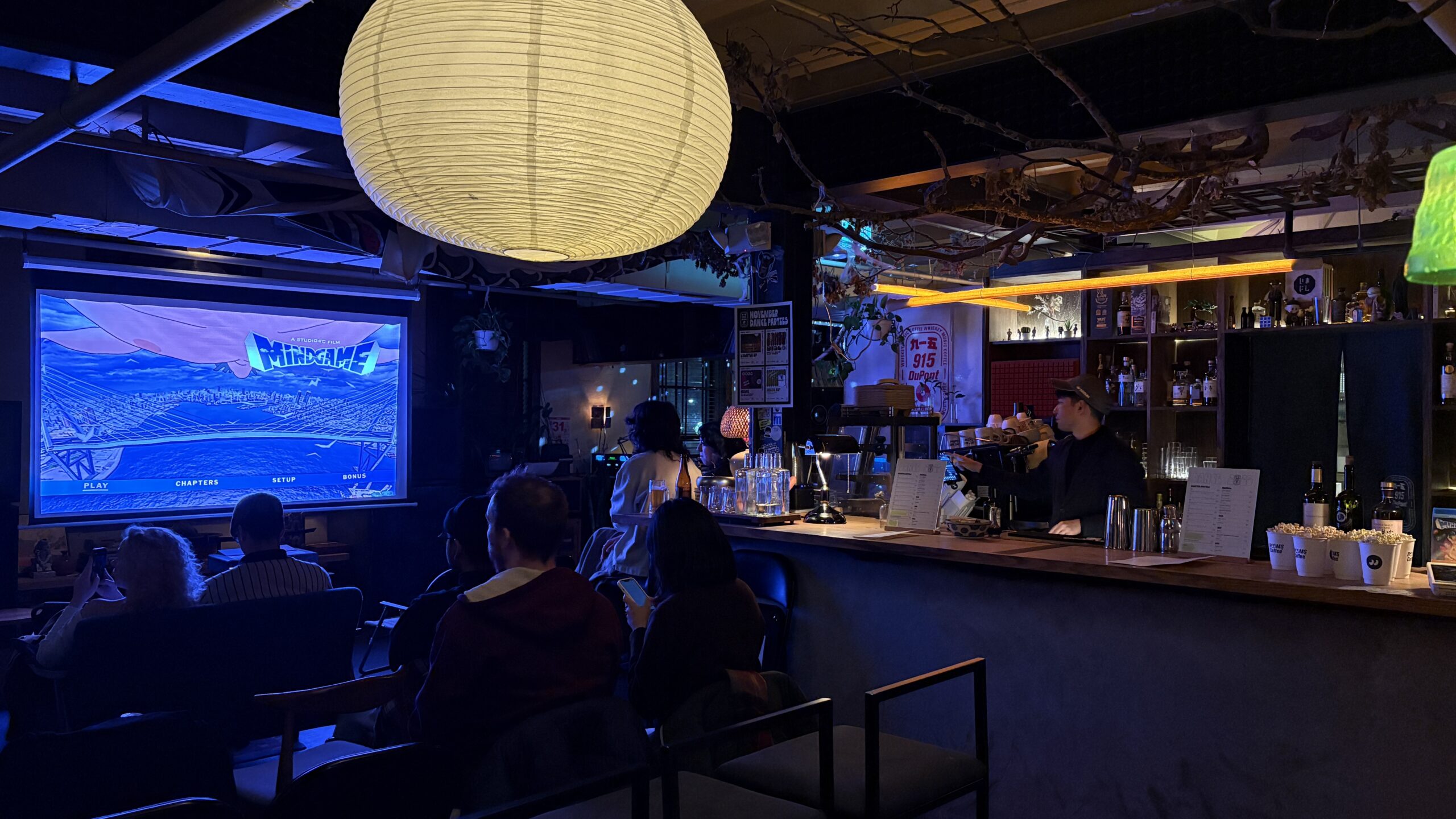
Palestinian-Canadian author Saeed Teebi mentioned al-Ali during the launch of his new book, You Will Not Kill Our Imagination, at this year’s Toronto Palestine Film Festival (TPFF) on Sept. 25. Teebi, who has published more books than he has visits to his homeland, likened himself to al-Ali in finding something that tethers them to their home. For Teebi, he found this tether in writing. Although he grapples with the distance between himself and Palestine, he says it is through a connection with those around him that he is able to understand its people.
“I have them in my mother. I have them in my sisters. I have them in my brother. I have them in the community. When I write about my father, I’m actually writing about Palestine. When I write about my grandmother’s poems, I’m writing about Palestine,” said Teebi.
You Will Not Kill Our Imagination is unique in its departure from Teebi’s first book, Her First Palestinian. He initially hesitated to write the former, it being his first memoir. The opening chapter, “Fear and Bodies,” takes readers to late 2023 and the fear Teebi felt scrolling through social media, inundated with thousands of videos depicting a genocide in Palestine.
At the book launch, Teebi described the experience of living within a Palestinian body, as subsets of society disregard the reality of the Palestinian genocide. Teebi illustrates undergoing a revelation, one that demonstrated that people did not consider him as important or valuable as others.
“The first time you see a small child riddled with bullets as she’s calling for an ambulance and there is no outcry everywhere for this to stop, you know for sure what this is. You know that you’re in a different kind of world. Your suspicions are a thousand per cent true. And for me, that was a massive revelation,” said Teebi.
In late October that year and thereafter, Teebi witnessed the destruction of entire neighbourhoods uploaded online, which he would send to his wife and vice versa. He described the despair that came with Israel waging a psychological war against all Palestinians, meant to disparage any hope for survival.
Teebi did not want to write a memoir, but there came a compulsion following an inescapable confrontation with Palestinian devastation that he could not stay silent.
“When I write about my father, I’m actually writing about Palestine. When I write about my grandmother’s poems, I’m writing about Palestine.”
In an interview with me, Teebi said that in his writing, he is conscious not to appeal to the centrist class but rather to those who already have Palestine in their hearts. He hopes that readers may use this book to arm themselves with knowledge and the affirmation that they are not alone in the fight for Palestinian liberation.
“I cannot be concerned with trying to change a mind on my own if two years of genocide have happened,” said Teebi.
The devaluation of Palestinian bodies brought with it the politicalization of the Palestinian identity as a result of social media and the daily news machine. Teebi explained that through this politicization came frequent accusations of Palestinians being unfair in discussions about Palestine.
“There is no space for things like rage when it comes from a Palestinian,” said Teebi.
Working as a lawyer following the escalation of Israel’s genocide, Teebi explained at the book launch that dissenting groups surveilled those advocating for Palestine. Then came the blacklists of those who had posted their support on their social media accounts and attempts to get them fired.
In our conversation, he explained that in writing this book, it was important to work with a publisher — in this case, Simon and Schuster — where he felt free from a sense of censorship and surveillance and was allowed the capacity to feel all the emotions running through him in his grief.
A resounding applause came from the crowd of guests as Teebi announced, “This book reflects every last thing that I want.”
“I write due to the connection I have with my father, but also with my mother, with my extended family, with my sense of the importance of human values like human dignity and justice.”
Comments
Nice article about Saeed Teebi new book. The strugle of Palestiniana is close to many hearts that it is important to spread the work of Teebi and lead us to adquire his book.
Here is a link to a CBC interview (Canculture editor permitted) with the autor.
https://www.cbc.ca/player/play/audio/9.6927777